
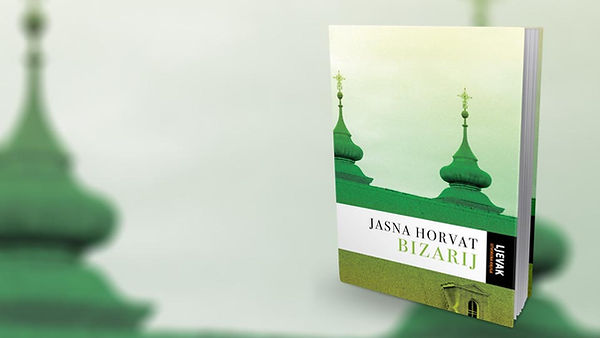
Bizzarium brings together fifteen interlinked stories about Osijek and the people whose lives, work, journeys or accidents of history have become part of the city’s cultural memory. Emperors, nobles, artists and soldiers appear across different periods, among them Isabella von Habsburg, Eugene of Savoy, Suleiman the Magnificent and Nikola Zrinski. Yet the city is more than a setting: Osijek is the axis that connects the narrators, characters and historical layers.
The novel’s conceptual design draws on Croatian grammar, particularly subordinate conjunctions and the relations they establish between clauses. Fifteen narrators and fifteen chapters form a balanced Oulipo-inspired structure in which fact and fiction continually reshape one another.
By arranging voices according to gender, era, profession and origin, Bizzarium questions inherited images of Osijek and proposes new ones. It is a literary portrait of the city, an archive of unusual destinies and an experiment in how language can organise Croatian cultural memory.